Are you a therapist wondering whether a custom or template website will actually help you book more clients, or just add to your expenses? With websites ranging from a few hundred to several thousand dollars, making the right choice is crucial for your practice.
The short answer: it depends on where you are in your practice and what you need your website to do. The longer answer involves understanding how each approach affects your ability to attract, connect with, and convert the right clients.
Let’s break it down.
What I Mean by “Template” and “Custom”
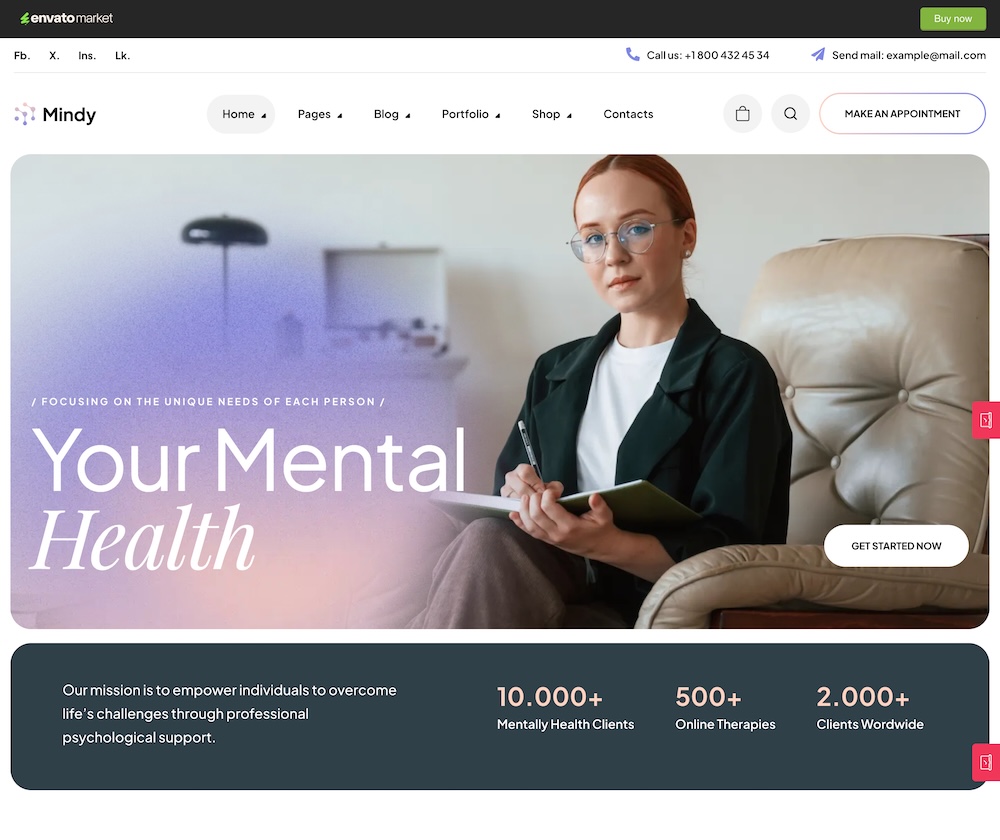
A template website uses a pre-designed layout from a platform like Squarespace, Wix, or a WordPress theme. You choose a template, swap in your own photos and copy, adjust the colours, and publish. The structure, layout, logic, and most of the design decisions are already made for you.
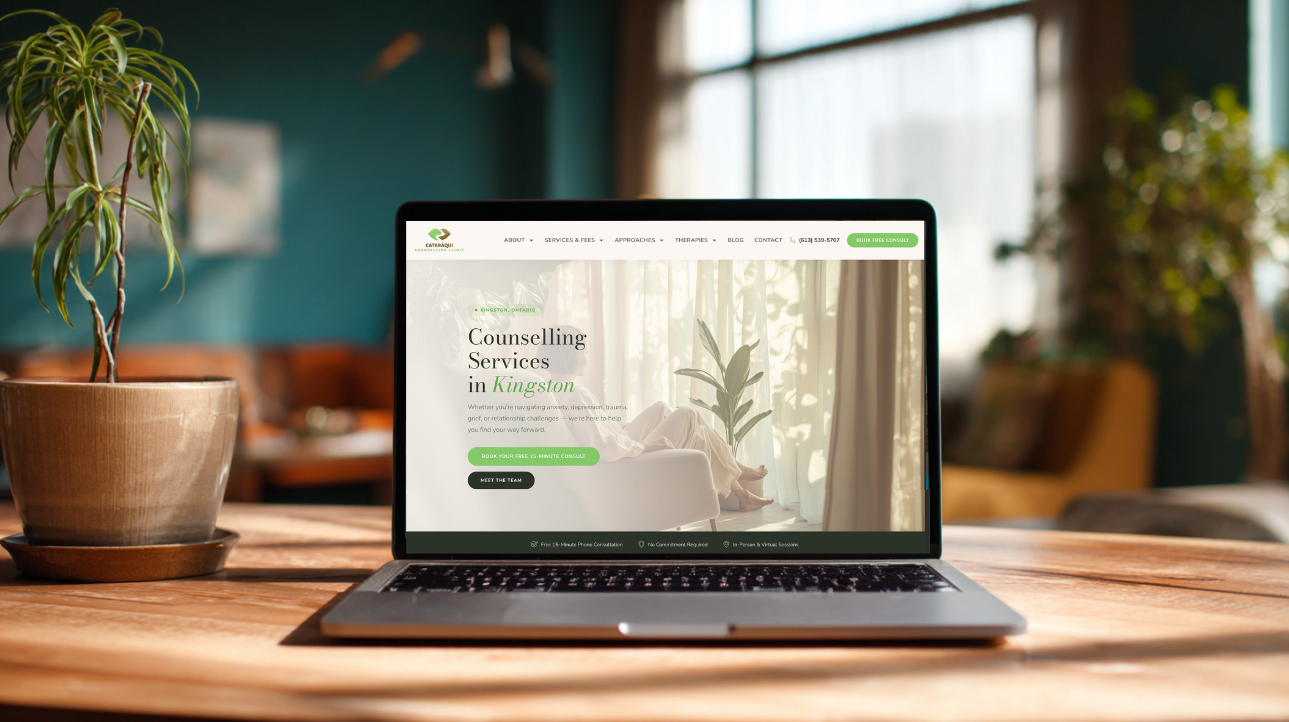
A custom website for therapists is built from scratch, or at a minimum, built with your specific practice, clientele, and conversion goals, driving every design decision. The layout, copy flow, booking integration, and page structure are all tailored to how your ideal clients search, evaluate, and decide to book.
Both can produce a professional-looking site. The difference lies in how well each works as a client-acquisition tool.
Where Templates Work Well
Templates make sense in some cases. If you’re a new solo practitioner, a clean Squarespace or WordPress template gets you online quickly and affordably. You’ll have a useful site as you build your caseload.
Templates also work when your practice is primarily referral-based, and your website is more of a digital business card than a lead-generation engine. If most of your new clients come from physician referrals or word of mouth, a simple site with your bio, contact details, and a booking link may be all you need.
The key advantage of templates is speed and cost. You can be live in a few days with spending a couple hundred dollars and platforms like Squarespace make it easy to update your own content without technical help.
Where Templates Fall Short for Therapy Practices
Template issues arise as your practice grows or when you invest in marketing, such as Google Ads or SEO, to drive traffic to your site.
Generic Structure That Doesn’t Match the Client Journey
Most templates are designed for general businesses: a homepage, an about page, a services page, and a contact page. But that’s not how therapy clients make decisions. Someone searching for “EMDR therapy Ottawa” doesn’t want to land on a generic services page and hunt for the right modality. They want a dedicated page that speaks directly to their concern, validates their experience, and makes booking effortless.
I cover this in detail in The Anatomy of a High-Converting Therapist Landing Page. Templates rarely support this kind of focused, modality-specific page structure out of the box.
Limited Booking Integration
If you use JaneApp, TherapyPortal, or another booking platform, smooth integration matters. Templates might allow a booking link, but a custom site can send visitors to a filtered, modality-specific service with no extra clicks. This flow directly impacts conversion rates.
Performance and Speed Issues
Many templates have features you won’t use, slow animations, and bloated code that lowers PageSpeed scores. Since over 60% of therapy searches are on mobile, a slow site loses clients. Custom sites load fast with only essential code.
The Hidden Time Cost of “Do It Yourself”
Templates are marketed as easy to use, and setting one up can be straightforward. But there’s a significant difference between launching a template and building a site that actually works for your practice. The initial setup is just the beginning.
Writing effective website copy is a skill most therapists haven’t been trained for, and it shows. You’ll spend hours drafting and rewriting page content, only to end up with the same “safe and supportive environment” language that appears on every other therapy site.
Then there’s image sourcing and resizing, learning how your platform handles SEO settings, troubleshooting layout issues on mobile, configuring your booking widget, and figuring out analytics. Each of these tasks is manageable in isolation, but together they add up to dozens of hours — hours you’re not spending with clients or growing your practice.
And it doesn’t stop at launch. Every time you add a new service, update your team page, or publish a blog post, you’re back in the platform wrestling with formatting, spacing, and mobile responsiveness. For a busy practice owner, the “affordable” template often costs far more in time than the price tag suggests.
With a custom site, that burden shifts to your designer. The copy is written by someone who understands the psychology of therapy clients. The images are optimized. The SEO is configured. And when you need to add a new modality or update your team, it’s handled for you, so you can focus on clinical work.
Cookie-Cutter Copy and Layout
As I discussed in Why Most Therapist Websites Don’t Convert, generic copy is one of the biggest conversion killers in the therapy space.
Templates encourage generic copy by providing generic placeholders. When your site structure is “About → Services → Contact,” the copy tends to follow suit: safe, interchangeable, and forgettable.
What a Custom Therapy Website Gets You
Conversion-First Design
Every section of a custom site is designed with one question in mind: Does this move the visitor closer to booking? The hero section, the empathy bridge, the trust signals, and the booking CTA. Each element is placed deliberately based on how therapy clients actually behave on a page. This isn’t guesswork. It’s informed by the patterns I see across dozens of therapy practice campaigns.
Dedicated Landing Pages for Every Modality
If you offer EMDR, somatic therapy, couples counselling, and anxiety therapy, a custom site gives each service its own dedicated page with targeted copy, relevant credentials, and a direct booking path. These pages rank in organic search and convert paid traffic from Google Ads. They’re the highest-ROI pages on your entire site.
Proper Tracking and Analytics
A custom site is built with GA4 and Google Tag Manager, with conversion tracking configured correctly from day one. You’ll know exactly which pages are driving consultations, which ad campaigns are performing, and where visitors are dropping off. Templates often make this difficult, especially on platforms like Squarespace, where options for code injection are in the highest pricing package.
SEO Built Into the Foundation
Custom sites are built for search from the start: clean URLs, proper headings, fast loads, structured data, and targeted content. Retrofitting SEO on a template is possible, but less effective and efficient.
Platform-Specific Booking Optimization
For JaneApp users, setting up dedicated disciplines for each modality and linking CTA’s for booking directly to filtered pages is extremely important for conversions. Visitors who click “Book Your Free EMDR Consultation” see one option, no confusing menus or irrelevant therapists. This optimization lifts conversion rates.
So, Which Should You Choose?
Choose a template if you’re starting out, your budget is tight, you get referrals, and your site is mainly informational. A clean, well-written Squarespace site works well here.
Invest in custom when you’re looking to grow through Google Ads or SEO, offer multiple services or therapists, your site isn’t converting, or you want your website to drive new clients.
If you don’t know which option fits, I can help practices answer this question. Read more about finding a website designer or schedule a free consultation with me.
A Website That Works as Hard as Your Practice
At Marketing Well, I design custom websites and landing pages for therapists and counselling practices. Every site is optimized for conversions, integrated with your booking platform, and built to rank locally.
Ready to get more clients through your website? Book a free consultation with me today to see exactly how a custom site can grow your practice. Take the first step to turn your website into a powerful client acquisition tool—contact us today to get started.